




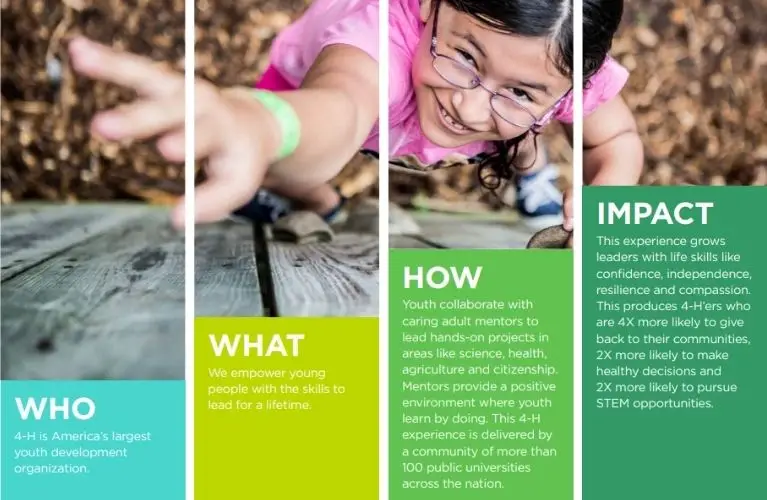
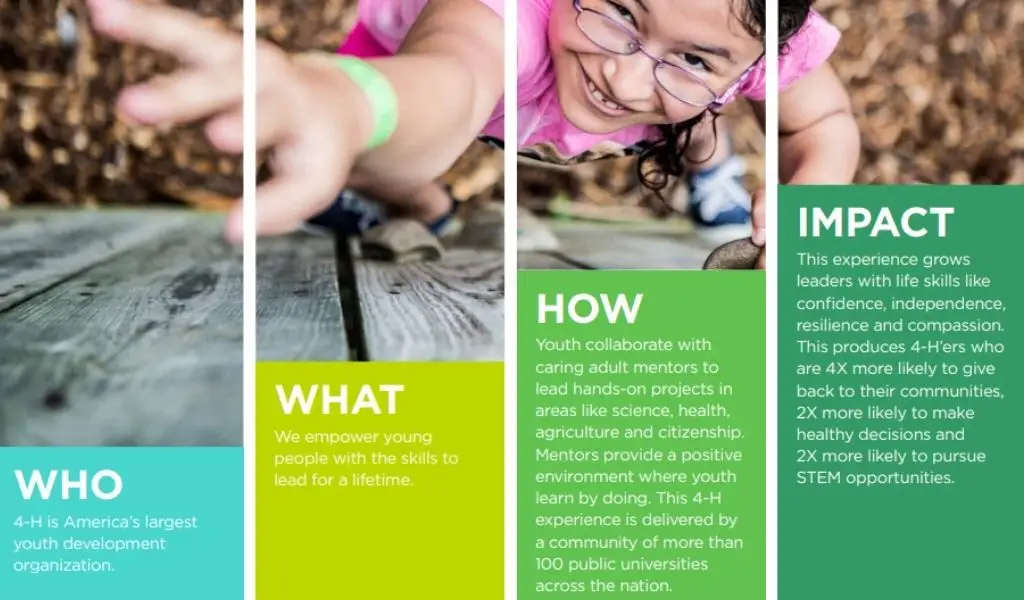
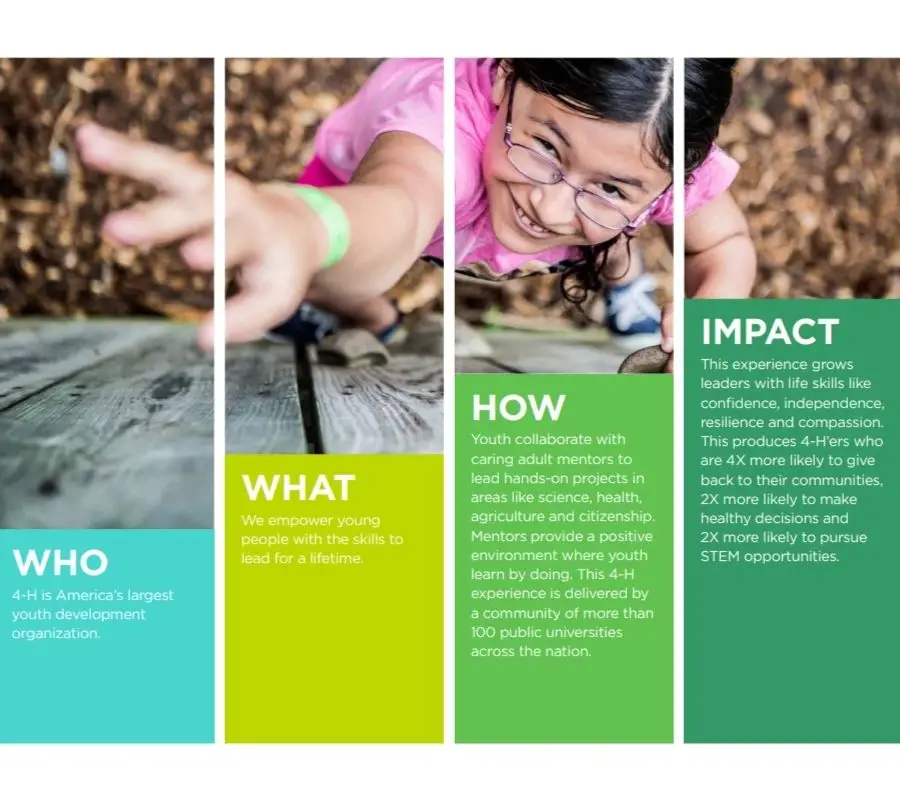
4-H is a youth development program that uses project-based experiences to teach our youth real life skills to prepare them to become positive members in their communities and world. Its motto is “To Make the Best Better”, and we always strive to create greater successes with each child in each project.
4-H members join and choose projects they are interested in. These projects vary from Rocketry and Robotics to Entomology (bugs, insects, etc.) to livestock and pets. Then members become part of a club that meets regularly to conduct business which allows the youth to be a part of a full functioning group. Within their club they perform community service, give presentations and run meetings with parliamentary procedure. In their clubs or during project meetings they learn about their chosen projects and in hands on experiences create a finished project by the end of the year. These finished projects, whether they are a market weight sheep or a walking robot, are displayed and judged at county fair. Throughout this process youth gain numerous skills that include responsibility, record keeping, and perseverance.
To Enroll: Visit the Join 4-H page for enrollment instructions!
After Enrollment: youth must choose a club to participate in. Youth are able to choose the club that best fits their needs, interest and schedules. New 4-H families are encouraged to attend a few different club meetings to find out which is the best choice for them. However, a club selection must be made within 45 days of enrolling. Once a club has been selected, please contact the Extension Office with the selection.
Youth under the age of 8 years old: youth that are 5-7yrs. old are encouraged to join Cloverbuds. This is a group that meets regularly to learn about 4-H and all the projects they can possibly be involved once they are a 4-Her. It is a great way for younger youth to “get their feet wet” and see what 4-H all is about without the pressures of competing.
For more information check out our resources!
I pledge ….
My head to clearer thinking
My heart to greater loyalty
My hands to larger service, and
My health to better living
For my club, my community,
My country, and my world
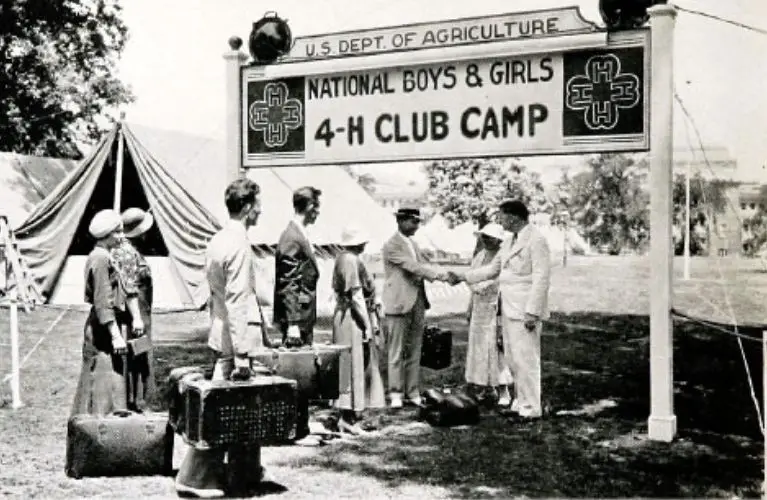
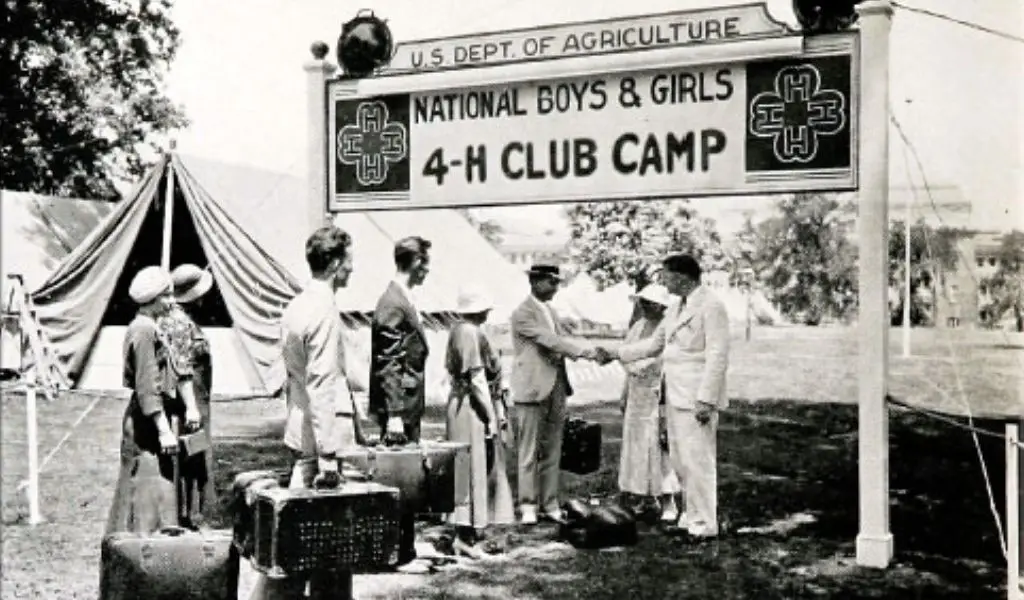
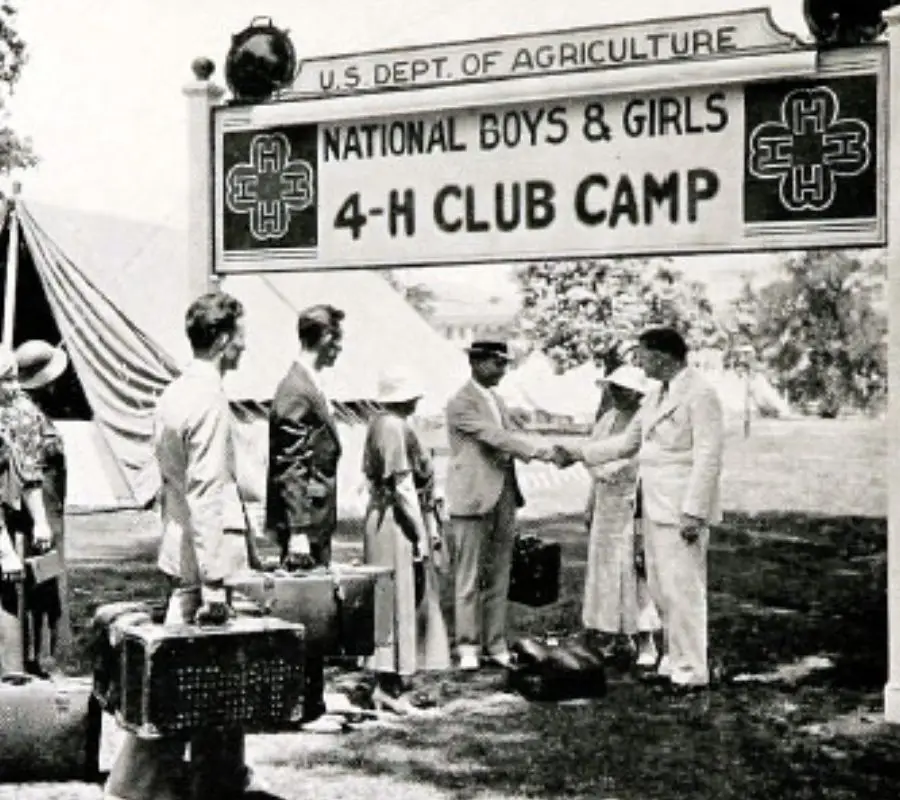
The pledge was adopted in 1927 during the first National 4-H Club Camp in Washington D.C. Otis Hall, state 4-H leader in Kansas, was responsible for the original wording, which remained unchanged until 1973 when the words “and my world” were added.
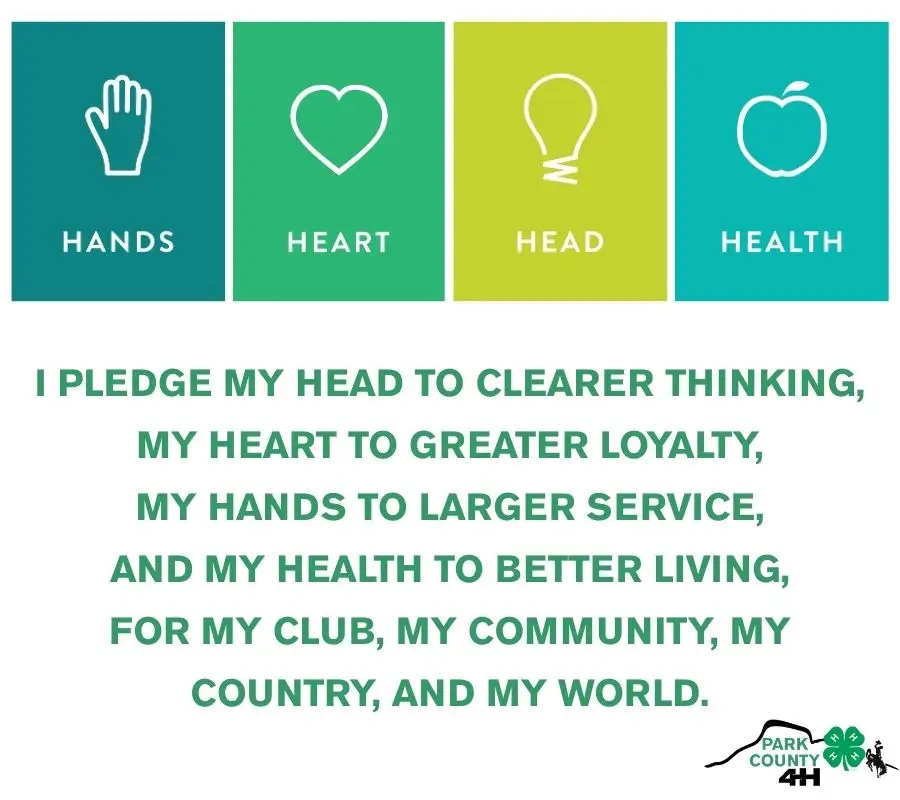
The Four H’s
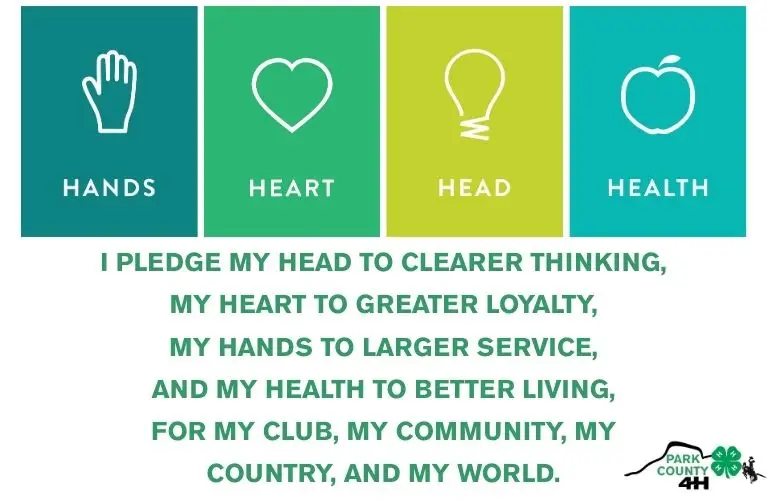
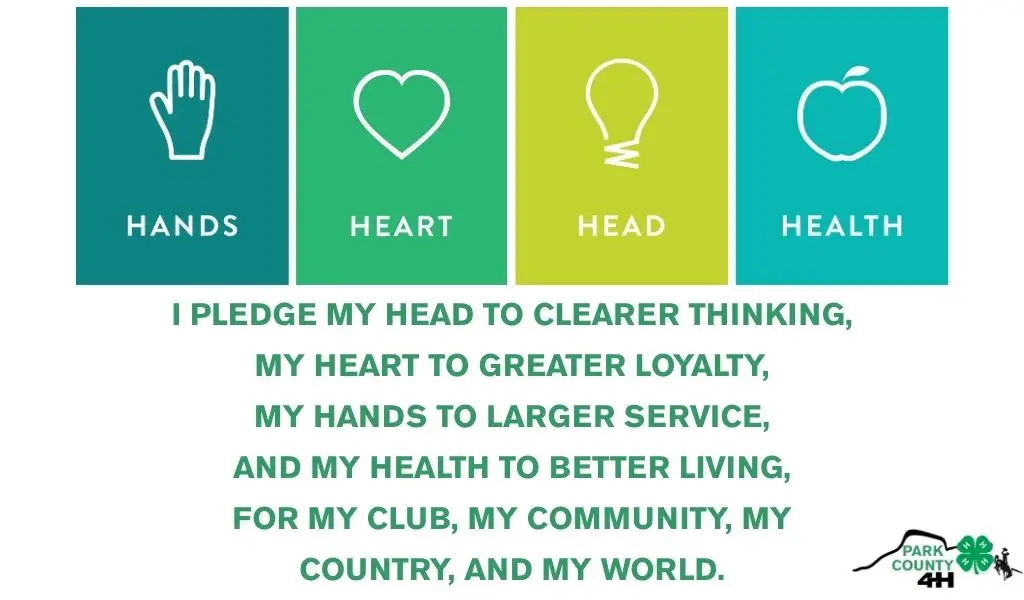
The four H’s stand for Head, Heart, Hands, and Health. “Head, heart, and hands” was a familiar phrase with public speakers in the early 1900s.
The three H’s were adopted by program organizers to reflect the educational theme of 4-H. A fourth “H” was added for health. Together the four H’s symbolized the development of the head, to think, plan, and reason; the heart, to care for others, accept citizenship responsibilities and develop positive attitudes; the hands, to be useful, helpful, and skillful; and health, to practice healthful living, enjoy life, and use leisure time productively.
What is now 4-H began in the early 1900s, when youth agriculture clubs appeared in different parts of the country at the same time. These early efforts were organized in rural schools or through “Farmers’ Institutes” organized by agriculture colleges to bring the latest scientific information to farmers and their families.
In 1914, the U.S. Congress the Smith-Lever Act, formally establishing Extension work on a cooperative basis among the U.S. Department of Agriculture, the state land grant colleges, and counties in each state. Funds were included for youth programs, which became known as 4-H in 1924.
4-H Projects
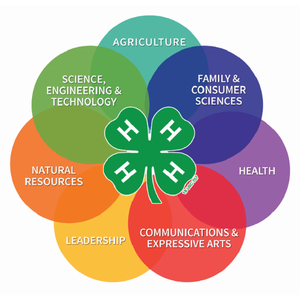
Wyoming 4-H members may choose from 45 different projects, or they may develop their own projects with the help of an adult volunteer leader. Projects are grouped into the areas of animal science, handicrafts, home economics, natural resources, and general, as well as technology.
4-H projects are built around three important principles: 1) Subject matter knowledge and skills, 2) Self-development , and 3) social interaction among people of different backgrounds, experiences, and ages.
Projects are real-life experiences that help members take responsibility for their own actions. Members develop good work habits and learn to work with others, sharing ideas and helping each other. Most project work is done in or near the home so the family can work and be together.
4-H Activities
4-H is fun! Members not only belong to clubs, but may also participate in activities such as fairs, contests, camps, tours, participation days, exchanges, and statewide events. These activities are designed to supplement club and project experiences. They offer opportunities to learn and practice skills beyond the opportunities available in the local club. Activities also provide a means for members to meet 4-H’ers from other clubs, communities, counties, and states.
Ivan L. Hobson is credited with starting the first 4-H clubs in Wyoming in 1913. Four kinds of clubs were promoted- crop production, potato, poultry, and garden and canning. Sheridan County hired the first full-time Boys’ and Girls’ Club agent in 1917. By 1919, state enrollment in youth clubs had increased to 1,562 members in 96 clubs.
The Wyoming 4-H program now reaches one in four youth ages 8-19 in the state.

The national 4-H emblem is a green four-leaf clover with the letter “H” on each leaf. The design was adopted as the national emblem in 1911. Congress has twice passed legislation protecting the 4-H name and emblem. Similar to a copyright, this protection means that the 4-H name and emblem cannot be used without authorization by the national organization.
Green and white are the 4-H colors. Green symbolizes springtime, life, and youth, while white stands for high ideals.
The 4-H motto is “To make the best better.” It was adopted in 1927 when the 4-H pledge was introduced.
4-H is the youth education program of the University of Wyoming Extension. 4-H membership is available to all Wyoming youth ages 8-19.
4-H members are in every county in Wyoming and number 15,500 statewide. Although 4-H is traditionally considered to be a rural youth organization, today’s 4-H members live everywhere. In Wyoming, about 30 percent of the members live on farms and ranches, while 40 percent live in small towns (under 10,000) or rural non-farm areas. Another 30 percent live in towns and cities.
UW Extension is an off-campus educational arm of the University of Wyoming. Specifically, Extension provides research-based educational information to help Wyoming citizens solve problems and develop skills related to youth, family, community, and farm.
The UW Extension system has specialists housed on campus in Laramie and county Extension educators in each county so information from the University of Wyoming can be “extended” to people in Wyoming.
4-H Outreach
Local clubs are major 4-H delivery systems. Wyoming 4-H reaches young people in a variety of other ways. For example, “Blue Sky Below My Feet” is a video series on space available to school classrooms. 4-H is also a part of the youth phase of the Expanded Food and Nutrition Education Program (EFNEP). This program is designed to teach basic nutrition to members of families with limited incomes. 4-H materials are often used to enrich school curriculums in many areas. The classroom teacher may be the leader, or volunteer leaders may come into the schools.
4-H work is implemented mostly in project clubs. A project club is a group of youth working with an adult volunteer leader on a single project, such as clothing, horses, or gardening. Some clubs are organized to include more than one project, such as a 4-H livestock club that includes members with projects in beef, sheep, and swine.
There are also 4-H community clubs. Members are enrolled in a wide variety of projects. Community club leaders provide overall leadership, but other volunteers work with members and their projects.
Most clubs range from 5 to 25 members. Each club may meet regularly throughout the year or only part of the year, depending on the project and the interests of both leaders and members.