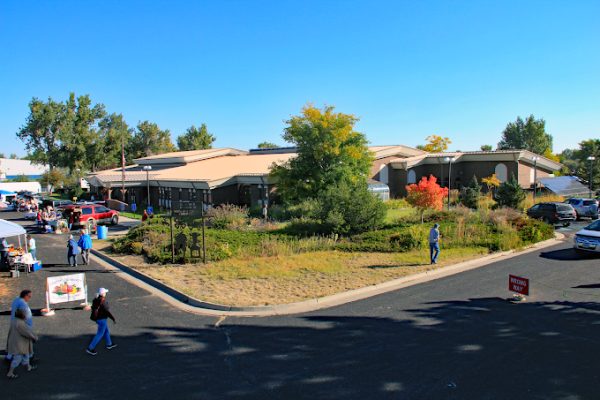
The raised berm on the west side of the Agricultural Resource and Learning Center comprises a wide variety of xeric plants chosen for their ability to survive and thrive in this arid environment. From flowering plants to shrubs and trees, there is something for everyone. Other gardens on the property include a shade garden, an alternative turf area, a hummingbird garden, a perennial garden, a small sensory garden, a silver garden focused on xeric plants, most of which are silver or white in color, and areas that are being developed into an arboretum and urban orchards.
“The sensory garden has plants that stimulate the senses, either by smell, touch, site, or sound,” says Donna Hoffman, the University of Wyoming’s state Master Gardeners Program coordinator.
“The garden has plants that encourage pollinators, so there is often a buzz about the garden,” Hoffman says. “We have several plants that are fuzzy with hairs on the surface. There are roses, so they have thorns; but, of course, we don’t encourage touching those, just looking. The roses, some herbs, and scented geraniums all deserve a bit of a sniff.”
Hoffman notes that sensory gardens that utilize organic growing practices can also be used to stimulate the taste senses, but these particular gardens are not certified organic so tasting the edible plants is not encouraged.