A wide variety of fresh vegetables, fruits, and herbs; vegetable and herb starts in the spring; homemade canned goods using fresh produce from the garden, including pickled items, marinara sauce, and preserves; and farm-fresh chicken and duck eggs.
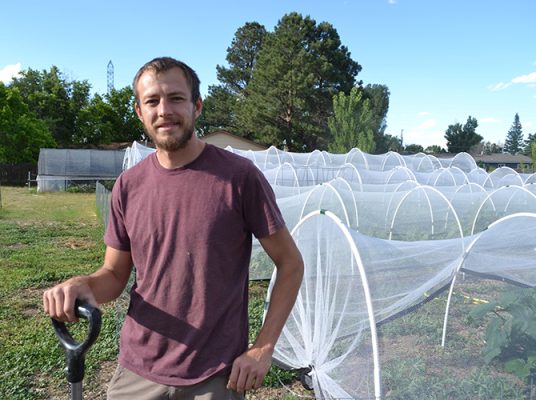
Owner Peter Haschke grows the produce in eight 5-foot-wide by 40-foot-long ground plots, a 250-square-foot hoop house, and a 200-square-foot greenhouse on his 0.6-acre lot in south Cheyenne.
During the growing season, the eight ground plots are covered with hail netting secured to PVC pipe. “I’m absolutely sold on this netting,” Haschke says. Prior to covering the last two ground plots with netting, south Cheyenne got hit by two bad hailstorms, which hammered all of the produce in the two uncovered plots. But produce in the other six plots was not affected at all. Starting in fall 2024, he plans to begin covering the plots with clear plastic to extend the growing season.
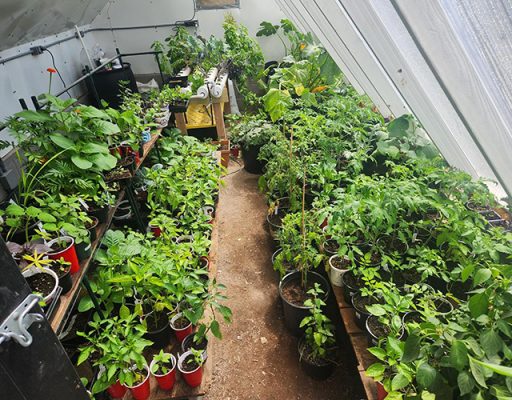
Haschke says the greenhouse he built is sunken two feet into the ground, and the slope of the greenhouse roof was carefully calculated so that the south-facing panels allow the greatest amount of sunlight during mid-winter, which not only helps the plants perform well, but also helps to heat the greenhouse. The north roof has no greenhouse panels, and instead was constructed of rafters that are insulated.
Black barrels filled with water, along with concrete blocks lining the back side of the greenhouse, collect heat during sunny days and slowly give off that heat during the night. Sinking the greenhouse into the ground also helps maintain heat, and typically the greenhouse stays above freezing during the night except when days are cloudy and the outside temperature is bitter cold. “The greenhouse takes very little supplemental heat,” says Haschke, who notes that plants are watered with a hydroponics system. He started the small farm in 2023, and enjoys experimenting with different plant varieties to determine which ones perform the best.