Wellness vs. Well-being: What’s the Difference?
Wellness vs. Well-Being: Two Related Ideas
Do you hear the terms wellness and well-being in the news, advertisements, worksites, the doctor’s office, and in everyday conversation? Today, it seems like these buzzwords are everywhere. But what are wellness and well-being, and what’s the difference?
We are unique individuals with different experiences, opportunities, genetics, and influences, so most likely we will all have different ideas and opinions on wellness and well-being, too.
The terms wellness and well-being are closely related and often used interchangeably, but they have distinct meanings and connotations.
Well-being (or wellbeing)
Merriam-Webster defines well-being as the state of being happy, healthy, or prosperous.
- Definition: A broader concept that encompasses the overall state of an individual’s life satisfaction and quality.
- Focus: Includes emotional, mental, social, spiritual, and physical health.
- Usage: Found in psychology, sociology, and policy (e.g., “subjective well-being,” “child well-being”).
- Nature: Results-based, about being.
- Example: His sense of well-being improved after he found a job with better work-life balance.
Wellness
Merriam-Webster defines wellness as
the quality or state of being in good health, especially as an actively sought goal.
- Definition: Typically refers to the active pursuit of habits and behaviors that promote health.
- Focus: Often physical and lifestyle-oriented—e.g., exercise, nutrition, sleep, preventive care.
- Usage: Common in healthcare, fitness, and workplace programs (e.g., “wellness programs”).
- Nature: Action-based and measurable; about doing.
- Example: Joining a gym and eating balanced meals are part of her wellness routine.
The History of Wellness
“Wellness is a modern word with ancient roots. The key tenets of wellness as both preventive and holistic, can be traced back to ancient civilizations from the East (India, China) to the West (Greece, Rome). In 19th-century Europe and the United States, a variety of intellectual, religious, and medical movements developed in parallel with conventional medicine. With their focus on holistic and natural approaches, self-healing, and preventive care, these movements have provided a firm foundation for wellness today.” Global Wellness Institute, 5/25/2025).
Wellness-focused and holistic modalities have gained more visibility since the 1960s and 1970s under the writings and thought leadership of an informal network of U.S. physicians and thinkers (such as Halbert Dunn, Jack Travis, Don Ardell, Bill Hettler, and others). As these teachings have evolved, proliferated, and gone mainstream, they have informed the healthy-living, self-help, self-care, fitness, nutrition, diet and spiritual practices that have become a flourishing wellness movement in the 21st century (Global Wellness Institute,5/25/2025).
The Wellness Wheel
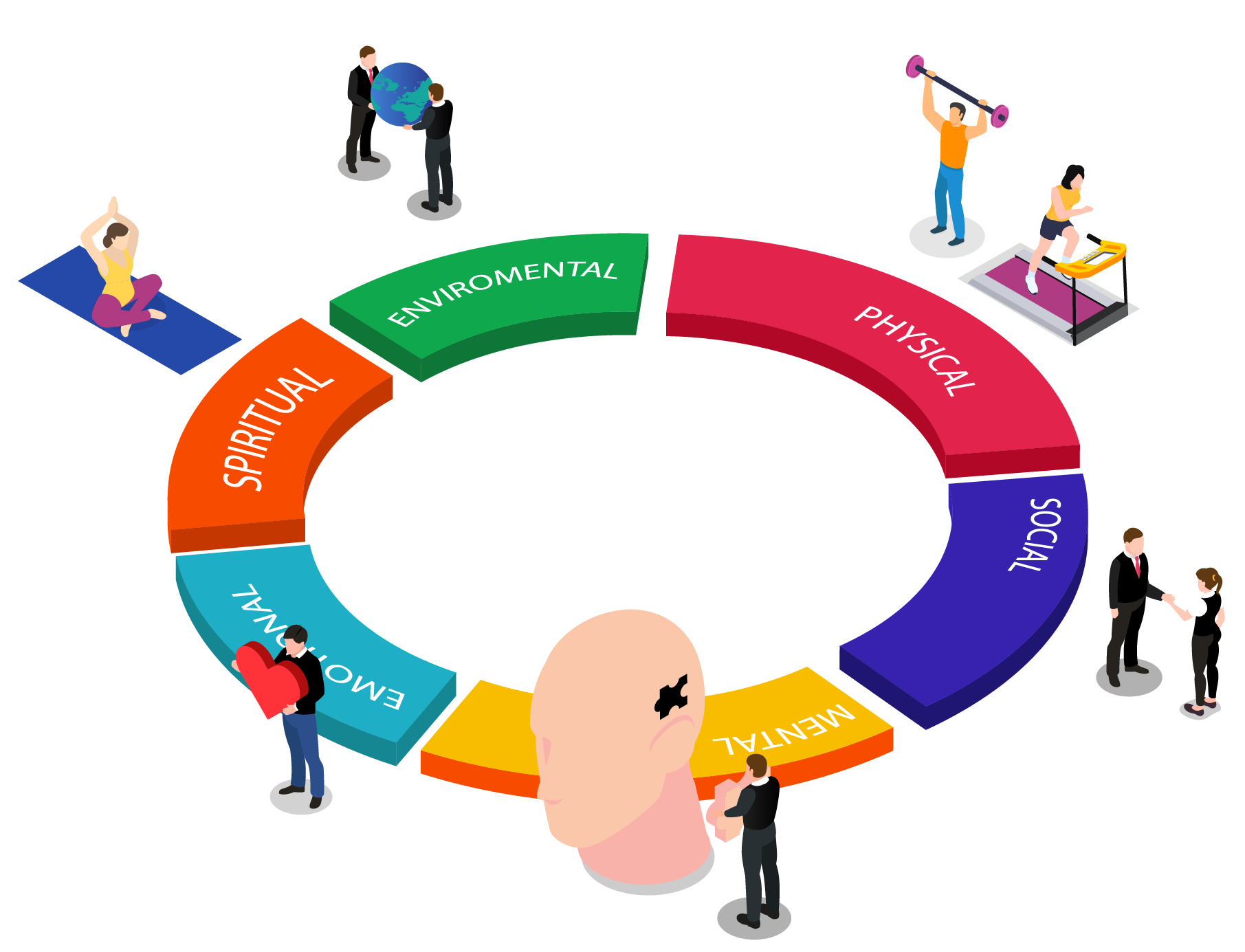
To help understand wellness, a wheel was created for a visual impact and a tool for self-exploration. The wheel is designed to be multidimensional, focusing on several dimensions that can help you achieve balance.
The wellness wheel components/dimensions may vary. Depending on who created them and the constructs that they measure, you can find wellness wheels with six, seven, or eight dimensions. For example, intellectual and occupational wellness might be grouped together on one wheel, but appear as separate components on another wheel.
Dr. Bill
Hettler, co-founder of the National Wellness Institute, outlined six dimensions of wellness as markers to help individuals accomplish a well-rounded, healthy lifestyle and live a life of value and meaning. Dr. Peggy Swarbrick developed a strength-based, eight-dimension wellness model to promote recovery from mental health and substance use.
The concept of the wellness wheel remains the same:
integrate all dimensions into your life.
Typical dimensions/components of the wellness wheel include:
Tips for Using the Wellness Wheel
References